


al-Maʿqūl
The Rational SciencesCreed (ʿaqāʾid), kalām, and philosophy (ḥikma).
The traditional Islamic sciences - rational, instrumental, and research - taught in Classical Arabic, the language of the Qurʾān and the Sunna.
Creed (ʿaqāʾid), kalām, and philosophy (ḥikma).
Logic, Arabic, and uṣūl al-fiqh.
Critical editing (taḥqīq) and academic research.
Establishing the method of the Muslim intellect upon an epistemic foundation that shapes its understanding of itself, of the world, and of the Creator - glorified and exalted is He.
He grants wisdom to whom He wills - and whoever is granted wisdom has been granted abundant good.
The curriculum proceeds upon a graduated path - building scholarly aptitude, consolidating sound understanding, and mastering inferential discipline.
Disciplining the tongue and mastering the tools of textual analysis: grammar, morphology, rhetoric, and semantics.
Correcting the intellect and disciplining inquiry: logic, theology, and wisdom.
Connecting knowledge to reality: research, authorship, critical editing, and contemporary issues.
Progress through successive scholarly levels, from foundational to advanced.
Focused courses on a topic or the critical study of a particular text.
A comprehensive study of the works and method of one of the Imams.
Open lectures and workshops broadening the student's intellectual horizons.
The general principles of each science, forming a disciplined conception of its nature, subject, and fruit.
The questions of the sciences with their rational and transmitted foundations and internal structure.
Questions with their conditions, constraints, and proofs - engaging disagreement and weighing evidence.

PhD researcher in the Islamic sciences · holder of scholarly ijāza from Syrian scholars · editor and author of several books.

Postgraduate researcher in the Islamic sciences · holder of scholarly ijāza · editor of several books.
Live sessions with the teachers, recordings to revisit, the classical texts, and a small focused circle - held together in one place.
Weekend sessions with both teachers
Revisit every lesson, any time
Studied in the original Arabic
A focused circle of students
Foundations of Rational Inquiry: Logic, Metaphysics, and Kalām in the Later Ashʿarī Tradition
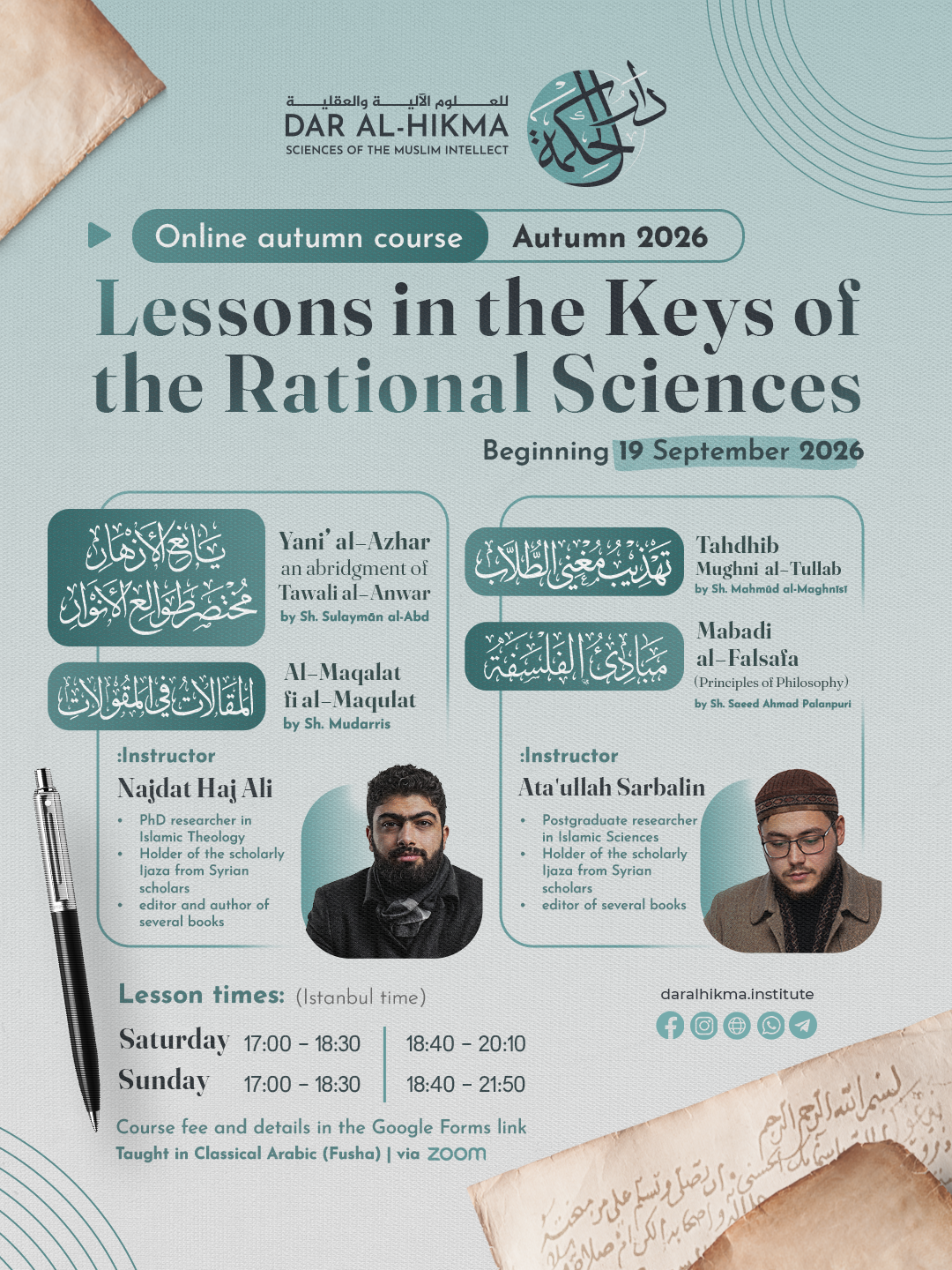
Reviving the classical methodology in forming the Muslim mind, disciplining the tools of inquiry, and qualifying the student to engage contemporary challenges through sound method.
Forming the Muslim mind in a complete epistemological formation - consolidating the sciences of instruments and wisdom and connecting them to the heritage of the umma.
Whatever good you forward for yourselves, you will find it with Allah.
Enrollment is open. Take the texts you want, or the full program - and if the timing isn't right, join the list for the next term.
